# Full Moon Dates 2027: Complete Calendar and Zodiac Signs
See all full moon dates 2027 with zodiac signs and eclipse nights, updated November 16, 2026, for planning, ritual, or curiosity. With real dates.
By Vera Solene · 2026-11-16 · https://whenwillitbemytime.com/dates/full-moon-dates-2027
As of November 16, 2026, the full moon dates in 2027 span twelve nights across the year. The first falls on January 22 in Leo, the last on December 13 in Gemini. This calendar year also carries thirteen new moons and three lunar eclipses that land directly on full moon nights, which is useful context if you are tracking **full moon dates 2027** for planning, ritual, or simple curiosity.
A full moon marks the point in the lunar cycle when the Moon sits opposite the Sun, appearing fully lit from Earth. A new moon is the opposite phase, when the Moon sits close to the Sun and appears dark. Both phases repeat roughly every 29.5 days, which is why most months get one of each.
## What Are the Full Moon Dates 2027?
Twelve full moons occur across 2027, one in most months and two in May alone through the calendar's natural drift. Each full moon carries a zodiac sign that colors its tone, based on where the Sun and Moon fall at that moment.
The table below lists every full moon date with its sign for the year. You can cross check these against a public ephemeris such as [timeanddate.com](https://www.timeanddate.com/) if you want to verify exact times for your own location.
Full Moon Dates 2027
| Date | Zodiac Sign | Note |
|---|
| January 22, 2027 | Leo | Standard full moon |
| February 20, 2027 | Virgo | Penumbral lunar eclipse |
| March 22, 2027 | Libra | Standard full moon |
| April 20, 2027 | Scorpio | Standard full moon |
| May 20, 2027 | Scorpio | Standard full moon |
| June 18, 2027 | Sagittarius | Standard full moon |
| July 18, 2027 | Capricorn | Penumbral lunar eclipse |
| August 17, 2027 | Aquarius | Penumbral lunar eclipse |
| September 15, 2027 | Pisces | Standard full moon |
| October 15, 2027 | Aries | Standard full moon |
| November 13, 2027 | Taurus | Standard full moon |
| December 13, 2027 | Gemini | Standard full moon |
Three of these twelve full moons are also lunar eclipses, which happens when the Moon passes through Earth's shadow. Those fall on February 20, July 18, and August 17. Eclipses tend to feel like accelerated full moons, pushing endings or revelations closer to the surface than usual.
## When Are the New Moon Dates 2027?
Thirteen new moons occur in 2027, one more than the full moon count because two land in August. New moons mark beginnings in the lunar cycle, often felt as a quieter, more inward few days.
New Moon Dates 2027
| Date | Zodiac Sign |
|---|
| January 7, 2027 | Capricorn |
| February 6, 2027 | Aquarius |
| March 8, 2027 | Pisces |
| April 6, 2027 | Aries |
| May 6, 2027 | Taurus |
| June 4, 2027 | Gemini |
| July 3, 2027 | Cancer |
| August 2, 2027 | Leo |
| August 31, 2027 | Virgo |
| September 29, 2027 | Libra |
| October 29, 2027 | Scorpio |
| November 27, 2027 | Sagittarius |
| December 27, 2027 | Capricorn |
Notice the February 6 new moon in Aquarius is also the date of an annular solar eclipse. Solar eclipses are new moons with extra charge, since the Moon briefly blocks part of the Sun's light from Earth's view. This one opens the year's eclipse season before the February 20 lunar eclipse closes it two weeks later.
For a wider view of how these phases stack across the calendar, the [moon calendar for 2027](/dates/moon-calendar-2027) lays out every lunation with more detail on timing windows.
 ## Which Full Moons in 2027 Are Eclipses?
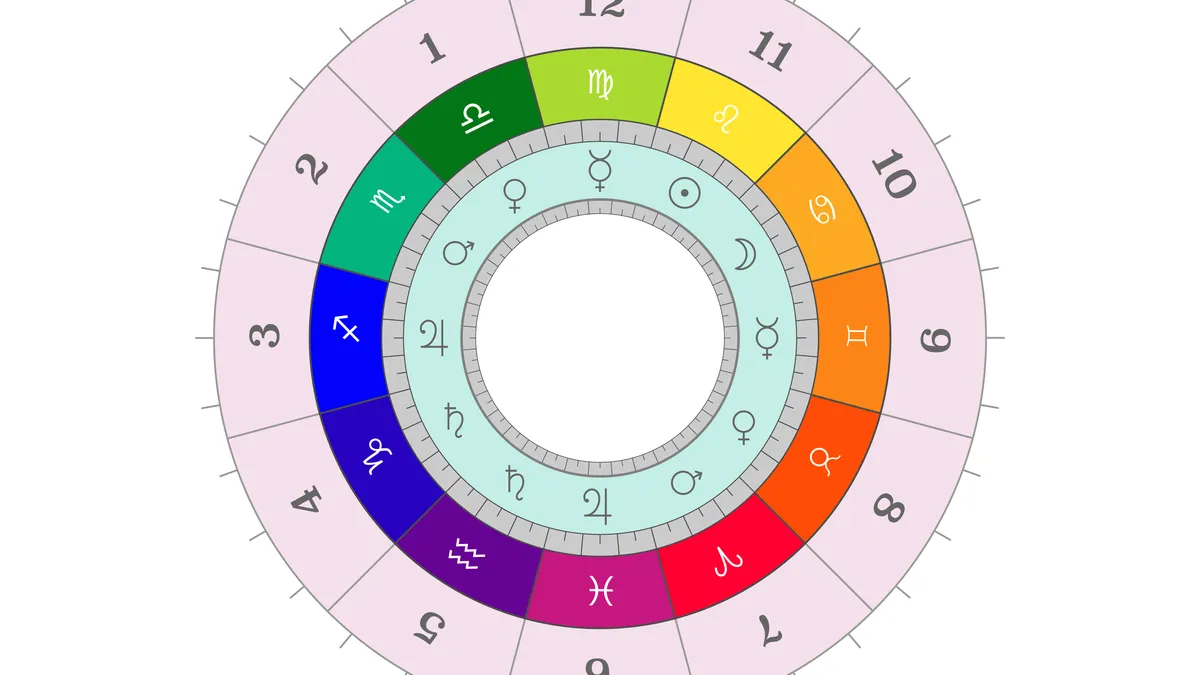
Three full moons carry eclipse status in 2027: February 20 in Virgo, July 18 in Capricorn, and August 17 in Aquarius. All three are penumbral lunar eclipses, meaning the Moon passes through the outer, lighter part of Earth's shadow rather than the darker core.
Penumbral eclipses are subtler than total ones. The visual dimming is slight, but the symbolic weight in timing work often still registers. These three dates sit inside the year's two eclipse seasons, one running from early February to late February, the other from mid-July through mid-August.
The August 2 total solar eclipse in Leo also falls near the August 17 lunar eclipse, making early August a dense stretch astrologically. If you are tracking relationship timing, the [windows for meeting someone](/windows/when-will-i-meet-the-one) page covers how eclipse clusters can mark turning points in that specific area of life.
## How Should You Use Full Moon Timing in Your Own Life?
Full moons are traditionally read as moments of culmination rather than beginnings. Something that started near a new moon roughly two weeks earlier often reaches a visible point around the full moon that follows.
This is a loose pattern, not a guarantee. Timing astrology treats these dates as weather conditions, a backdrop that may support certain kinds of clarity, not a fixed schedule for events to occur. The sign of each full moon suggests a flavor, Leo full moons in January tend to highlight recognition and self-expression, Scorpio full moons in April and May often bring up what has been held beneath the surface.
Saturn and Jupiter transits add longer context around these monthly markers. For instance, when Saturn squares your natal Saturn, which happens around ages 21 to 22 and again at 36 to 37, full moons during that window can feel heavier, more structural. Pairing short lunar cycles with these longer planetary ones gives a fuller sense of timing rather than reading any single full moon in isolation.
 ## Why Do Some Months Have Two New Moons or Full Moons?
A lunar month runs about 29.5 days, slightly shorter than most calendar months. Over a year this gap accumulates, occasionally producing two new moons or two full moons in a single month.
In 2027 this shows up in August, which holds two new moons, on August 2 and August 31. No calendar month this year holds two full moons, since the gap has not yet accumulated enough by December.
Some traditions call a second full moon in one month a blue moon, though that term has shifted meaning over centuries. For 2027 specifically, the pattern worth tracking is the double new moon in August, which overlaps with the year's most active eclipse stretch.
## What Else Is Happening Astrologically in 2027?
Lunar cycles do not move alone. Several longer transits run through 2027 and shape the backdrop against which these full and new moons land.
Mercury retrograde occurs three times in 2027: February 9 to March 3, June 10 to July 4, and October 7 to October 28. Mars retrograde runs January 10 to April 1, overlapping with Jupiter retrograde from December 12, 2026 through April 12, 2027. Saturn turns retrograde from August 9 through December 23, 2027, moving through Aries the entire time.
Retrograde Periods in 2027
| Planet | Start Date | End Date |
|---|
| Mercury | February 9, 2027 | March 3, 2027 |
| Mercury | June 10, 2027 | July 4, 2027 |
| Saturn | August 9, 2027 | December 23, 2027 |
| Mercury | October 7, 2027 | October 28, 2027 |
A retrograde describes a period when a planet appears to move backward from Earth's view, often associated with review, delay, or revisiting old threads. These four windows are worth noting if you are planning around any of the full or new moon dates above, since a retrograde can slow the pace of whatever a nearby lunation is trying to signal.
For a broader map of how these longer cycles interact with your own chart, the [dates and timing hub](/dates) collects the year's major transits in one place. If you want background on how this kind of timing work is approached here, the [about page](/about/vera-solene) explains the method behind reading transits as conditions rather than predictions. And if you are new to the site generally, [the homepage](/) outlines what is on offer.
Full moons and new moons are steady, repeating markers. They do not determine outcomes on their own, but they offer a rhythm worth watching alongside the larger planetary weather of 2027.
Your Window Reading.